Ear infections, blocked noses and sore throats are some of the most common reasons parents bring their children in for a check-up, and most settle on their own. But some signs are worth a specialist's look, especially when they keep coming back, get worse, or affect sleep and speech. Below is a plain-language guide to what parents commonly notice.
Ears
Ear pain, especially at night or when lying down
A baby or toddler repeatedly tugging or rubbing at one ear
Fluid, pus or a foul smell draining from the ear
Three or more ear infections within six months
Not responding to sounds or turning the volume up unusually high
Nose & sinuses
Nasal congestion lasting more than 10 days
Constant mouth breathing, even when not sick
Thick, discoloured nasal discharge with facial pain
Frequent nosebleeds
Breathing well through only one side of the nose
Throat & tonsils
Frequent or long-lasting sore throats
Difficulty or pain when swallowing food
Visibly enlarged or white-coated tonsils
A voice that stays hoarse for more than two weeks
Bad breath that doesn't improve with brushing
Sleep & breathing
Loud snoring most nights, not just when unwell
Gasping, choking sounds or pauses in breathing during sleep
Restless sleep or unusual sleeping positions to breathe easier
Daytime sleepiness, irritability or trouble concentrating at school
Bedwetting alongside snoring in an older child
Speech & development
Not startling at loud sounds as a baby
Delayed speech or unclear words compared to other children the same age
Appearing to hear some sounds but not others
Sitting very close to the TV or asking for the volume to be turned up
Not passing a newborn hearing screening
You don't need a referral. If any of these signs sound familiar, or if something just feels off with your child's ears, nose or throat, a short consultation can help you understand what's going on and what, if anything, to do next.
Why early evaluation matters
Untreated ear or breathing issues in early childhood can quietly affect hearing, speech and sleep quality. Getting an accurate answer early, whether that means reassurance, a short course of treatment or a specialist referral, protects your child's development and saves families months of worry.
What to bring to the visit
A short note on how long symptoms have lasted, how often they recur, any past ear or throat infections, and if possible a short recording of unusual breathing or snoring at night.
From common ear infections to hearing and sleep concerns, our team cares for children's ears, nose, sinuses and throat.
Middle ear infections and persistent fluid behind the eardrum are among the most common childhood illnesses, often linked to colds or allergies.
Enlarged or repeatedly infected tonsils and adenoids can cause sore throat, difficulty swallowing, mouth breathing and snoring.
A persistently blocked or runny nose can stem from allergies, colds, sinus infections or a nasal blockage that needs assessment.
Hearing difficulties from infections, fluid build-up, or a condition present from birth can affect speech if left unaddressed.
Loud snoring or breathing pauses during sleep can point to obstructive sleep apnoea, often related to enlarged tonsils or adenoids.
Persistent hoarseness, a voice that sounds different, or ongoing difficulty swallowing can occasionally point to an ENT-related cause and merits a review.
Knowing what happens next makes the day easier for you and your child.
Book online or call us. Bring any past prescriptions, hearing test reports or a note of how long symptoms have lasted.
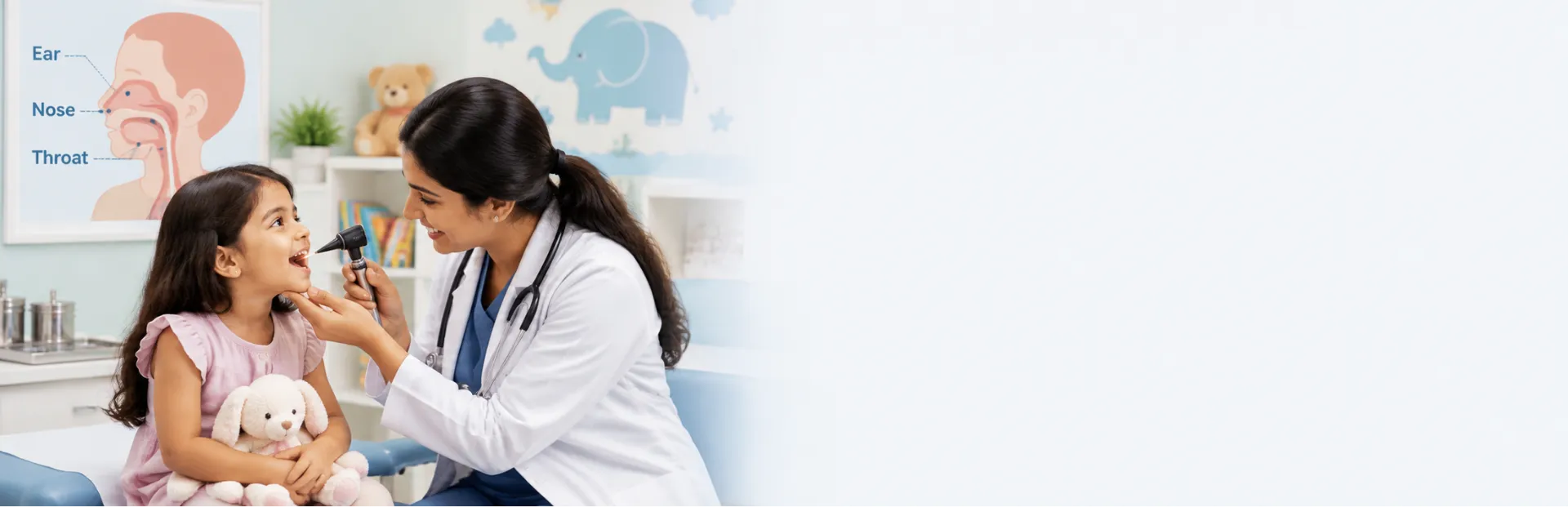
The doctor listens to your concerns, reviews your child's history and does a gentle ear, nose and throat examination.
If more information helps, we explain each test first, such as a hearing check or a look inside the ear with a scope.
You leave knowing the diagnosis or next step, the treatment plan, and when to follow up.
Most evaluations start simple and only go further if needed.
A gentle look inside the ears, nose and throat using a light or a small scope, usually the first and only step needed.
Age-appropriate tests such as tympanometry or audiometry to check how well sound is being heard and processed.
For mild or improving symptoms, a short observation period with clear guidance on what to watch for is often the right first step.
Where surgery or advanced testing may help, such as for recurring infections or sleep apnoea, a referral to a pediatric ENT surgeon is arranged.
Treatment is matched to the cause, and often starts with the simplest option first.
Our goal isn't only clearing an infection. It's a child who can hear, breathe and sleep well, and parents who know what to watch for next.
Children aren't small adults, so their ear, nose and throat care shouldn't feel like it either.
Pediatricians who understand how ENT conditions present differently in children, and who examine calmly and gently.
Ear and throat exams can feel intimidating to a young child. A warm, unhurried environment makes a real difference.
Whether it's home care, a wait-and-watch plan, or a referral, you should leave knowing exactly what to do next.
Some ENT concerns overlap with allergies, sleep or speech development, so the right specialists get looped in when it matters.
Consultations available at Kalyan Nagar, RT Nagar, Malleswaram and New BEL Road.
“If you can't find the answer to your question here, please don't hesitate to contact our support team for assistance.”
A pediatric ENT specialist treats conditions of the ear, nose and throat in children, including ear infections, tonsil and adenoid problems, nasal congestion, sinus issues, hearing concerns and voice or swallowing difficulties.
Children have shorter, more horizontal Eustachian tubes than adults, which drain less efficiently and make it easier for fluid and infection to build up in the middle ear.
Enlarged tonsils or adenoids should be evaluated if they cause frequent throat infections, difficulty swallowing, loud snoring, or pauses in breathing during sleep.
Occasional mild snoring, especially with a cold, is usually not concerning. However, frequent loud snoring, gasping, or breathing pauses during sleep should be evaluated, as they may indicate obstructive sleep apnoea.
Hearing is assessed through newborn hearing screening, and later through age-appropriate hearing tests such as behavioural audiometry, tympanometry or otoacoustic emissions testing, depending on the child's age.