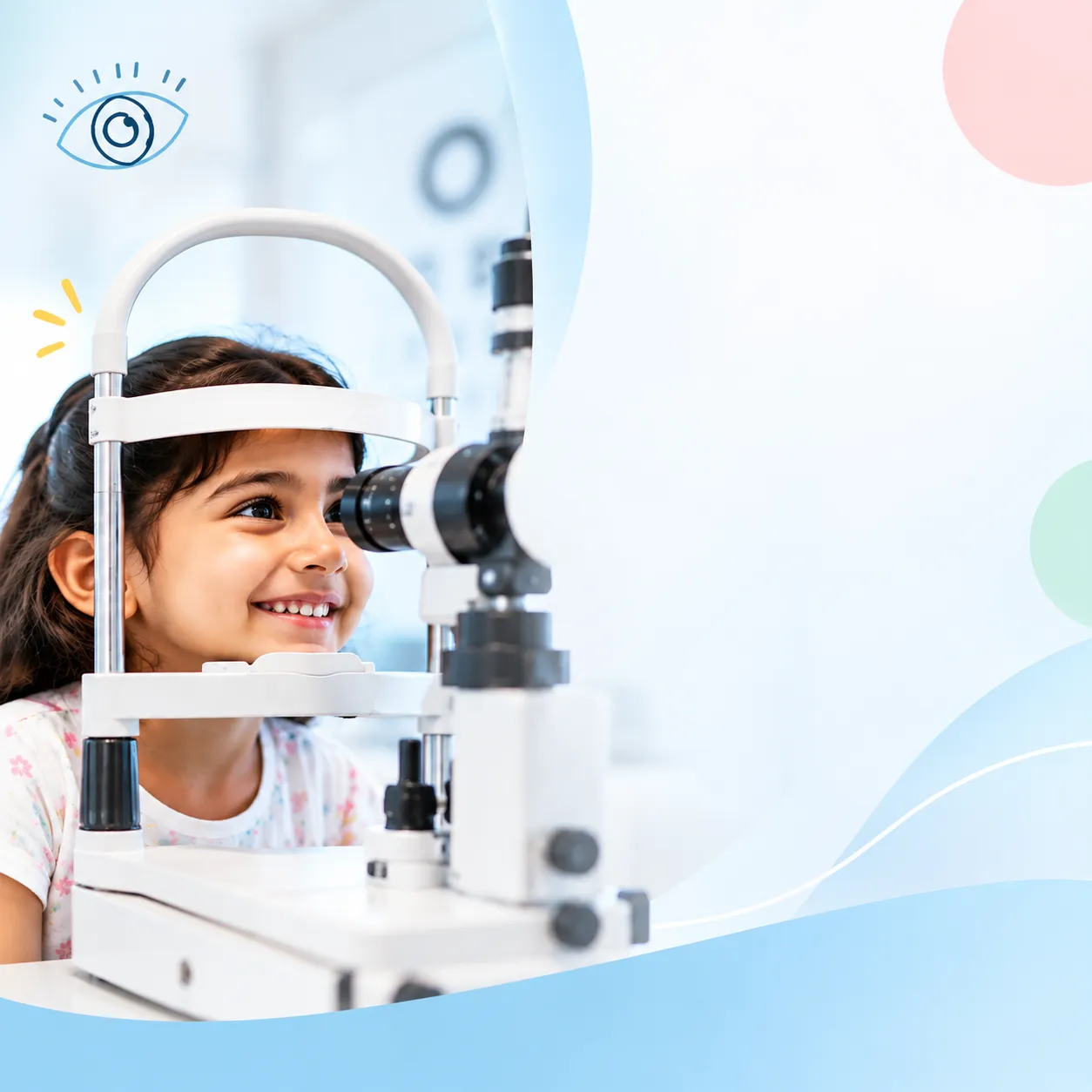
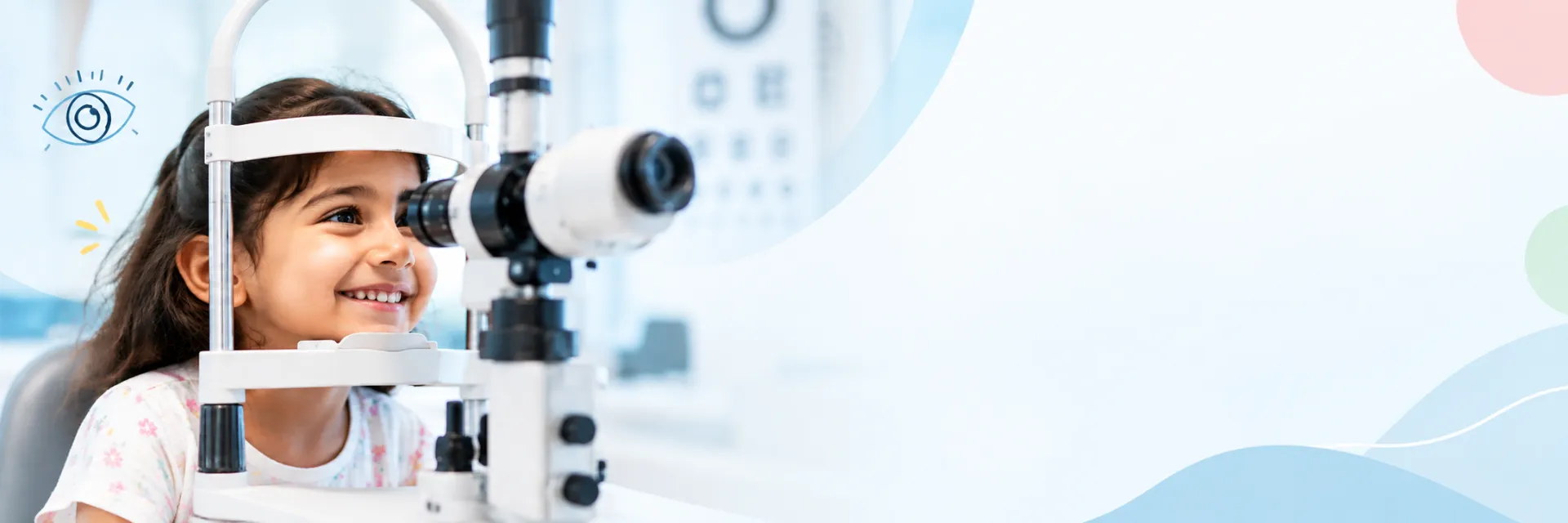
A child's eyes keep developing well into school years, and many vision problems are easier to treat the earlier they are picked up. Children rarely complain about blurry vision, because to them it's normal. Below is a plain-language guide to signs parents and teachers commonly notice, grouped the way our pediatric eye specialists think about them.
Vision & focus
Sitting very close to the TV or holding books near the face
Squinting, tilting the head or closing one eye to see
Trouble reading the blackboard or copying from it at school
Falling grades or losing interest in reading and homework
Complaining of blurry or double vision
Eye alignment
One or both eyes turning in, out, up or down
Eyes that don't move together or seem misaligned in photos
A newborn's eyes still crossing beyond 3 to 4 months of age
One eye seeming weaker or less used than the other
A noticeable face turn or head tilt while watching things
Eye comfort
Frequent headaches after reading or screen time
Rubbing eyes repeatedly or complaining of tired eyes
Light sensitivity, squinting outdoors or at bright screens
Burning, itching or a gritty feeling in the eyes
Short attention span during close-up tasks
Watering & discharge
Constant watering from one or both eyes in a baby
Yellow or green discharge, or crusted lashes on waking
Red, swollen or itchy eyes that keep returning
A blocked tear duct in a newborn, not clearing by 6 to 12 months
A stye, lid swelling or lump that doesn't settle
Appearance of eyes
A white or cloudy reflex in the pupil, especially in photos
Drooping of one or both upper eyelids
One eye appearing larger, smaller or protruding
Jerky or wobbly eye movements the child can't control
Any eye injury, scratch or foreign body in the eye
You don't need a referral. If any of these signs sound familiar, or if a routine school screening suggests a check, a short pediatric ophthalmology consultation can give you clarity and the right next step.
Why early eye checks matter
A child's visual system develops rapidly up to the age of 7 to 8 years. Catching issues like squint, lazy eye or high refractive errors in this window prevents long-term vision loss. Many conditions respond beautifully to simple glasses, patching or exercises when found early.
What to bring to the visit
Any current spectacles, previous eye prescriptions or reports, your child's school screening results, and a note of what you have been noticing at home. If your child has a family history of squint, lazy eye or childhood glasses, do mention it.
From newborn eye screening to glasses, squint correction and surgery, our pediatric ophthalmology team cares for your child's vision at every stage of growth.
Accurate eye checks for myopia, hyperopia and astigmatism, with the right prescription glasses and advice on controlling fast-progressing myopia in school-going children.
Treatment of strabismus and amblyopia with glasses, patching, vision therapy or squint surgery when needed.
Care for infant blocked tear ducts, probing where needed, and treatment of chronic watering or discharge.
Treatment of conjunctivitis, styes, chalazion and seasonal eye allergies common in Bangalore kids.
ROP (retinopathy of prematurity) screening for preterm babies and congenital eye condition checks for newborns.
Specialist care for childhood cataract and glaucoma, eyelid problems like ptosis, eye trauma, and follow-up for genetic eye conditions.
Every test is child-friendly, play-based where possible, and takes your child's age into account.
Age-appropriate vision tests, cover tests and eye movement checks to pick up squint or lazy eye.
The gold-standard eye drop test to find your child's accurate glass power, without guesswork.
A detailed look at the front and back of the eye to check for infection, cataract or retinal issues.
Preterm retina screening and red-reflex checks for newborns, bedside wherever possible.
Treatment is child-first — glasses, drops and play-based therapy before any surgery, and only when needed.
Our goal isn't just a clearer prescription. It's a child who sees well, learns well and grows up confident, and parents who feel supported along the way.
Knowing what happens next makes the day easier for you and your child.
Book online or call us. Carry current glasses, past prescriptions and any school eye-screening report.
The ophthalmologist listens to your concerns, checks family history and does a child-friendly eye examination.
If more information helps, we explain each test first — cycloplegic refraction, retinal check or squint evaluation.
You leave knowing the diagnosis, glasses or treatment plan, and when to come back for review.
A children's hospital first, with eye checks and treatment designed around how kids actually sit, listen and respond.
Specialists trained in children's eye care, not adult eye doctors seeing kids on the side.
Modern vision testing, imaging and squint assessment tools, all under one roof.
Calm, colourful spaces that help reduce anxiety during eye tests and procedures.
Pediatricians, eye specialists, orthoptists and optometrists working on one plan for your child.
Pediatric eye care at Kalyan Nagar, RT Nagar, Malleswaram and New BEL Road.
The right pediatric ophthalmologist is one who specialises in children's eye care, is patient with young kids and can accurately check vision in babies and toddlers who can't read a chart. At Shishuka Children's Hospital, our pediatric eye specialists treat only children, from newborn ROP screening to teenage myopia. You can meet our team at Kalyan Nagar, RT Nagar, Malleswaram and New BEL Road.
Every newborn should have a basic eye screening. A detailed check is recommended around 6 months, again at 3 years, and before starting school. After that, a routine eye check every 1 to 2 years helps catch refractive errors early. Preterm babies need special ROP screening, and children with a family history of squint, lazy eye or high glasses should be checked sooner.
Yes, many cases are. Lazy eye (amblyopia) is usually treated with the right glasses, patching the stronger eye and vision therapy, especially when started early. Some types of squint also improve with glasses or exercises alone. Surgery is considered only when the squint is large, isn't responding to other treatment, or needs correcting for alignment. Our pediatric ophthalmologists in Bangalore always start with the least invasive option that works for your child.
Fast-progressing myopia is becoming common among Bangalore school kids. We offer evidence-based myopia control, which may include special glasses, low-dose eye drops, daily outdoor time, and reducing continuous screen time. Our pediatric eye specialists build a plan that fits your child's age and school routine, and we review progress every few months to adjust.
Consultation fees at Shishuka Children's Hospital are transparent and in line with other quality pediatric eye-care services in Bangalore. Charges vary slightly by branch, by consultation type (first visit, follow-up or online) and whether tests like cycloplegic refraction are needed. For the current fee at your preferred location, please call us or check while booking your slot online.