
Knock Knees and Bow Legs in Children: When Should Parents Be Concerned?
Many parents notice changes in their child’s leg shape as they grow. Two common conditions seen during childhood are bow legs and knock knees. While these conditions can sometimes worry parents, they are usually part of normal growth and development.
Understanding when these changes are normal and when to seek medical advice can help ensure healthy bone development in children.

What Are Bow Legs?
Bow legs (Genu Varum) occur when a child’s legs curve outward, creating a gap between the knees while the ankles remain together.
This condition is commonly seen in infants and toddlers. It happens because babies spend months in a curled position inside the womb.
When do bow legs correct themselves?
In most children:
- Bow legs are visible from birth to about 2 years of age
- The legs gradually straighten as the child starts standing and walking
- By age 2–3 years, the alignment usually improves naturally
What Are Knock Knees?
Knock knees (Genu Valgum) occur when a child’s knees touch or come close together while the ankles remain apart.
This is a normal stage of development for many children.
When do knock knees appear?
Typically:
- Knock knees appear between 3 and 6 years of age
- The condition gradually improves as the child grows
- By age 7–8 years, the legs usually reach normal alignment

When Should Parents See a Pediatric Orthopedic Specialist?
Although bow legs and knock knees are usually harmless, parents should seek medical evaluation if they notice:
- The condition persists beyond the expected age
- The deformity is present on only one leg
- The leg shape is worsening over time
- The child experiences pain or discomfort
- Difficulty walking or frequent falls
- Short stature or delayed growth
Early evaluation helps identify whether the condition is part of normal development or caused by an underlying issue.
Possible Causes of Abnormal Leg Alignment
In some cases, persistent bow legs or knock knees may occur due to underlying conditions such as:
- Vitamin D deficiency (Rickets)
- Bone growth disorders
- Previous infections
- Past injuries affecting bone growth
- Genetic conditions
A pediatric orthopedic specialist can determine the exact cause through proper evaluation.
How Are Bow Legs and Knock Knees Diagnosed?
Diagnosis usually includes:
- Detailed medical history
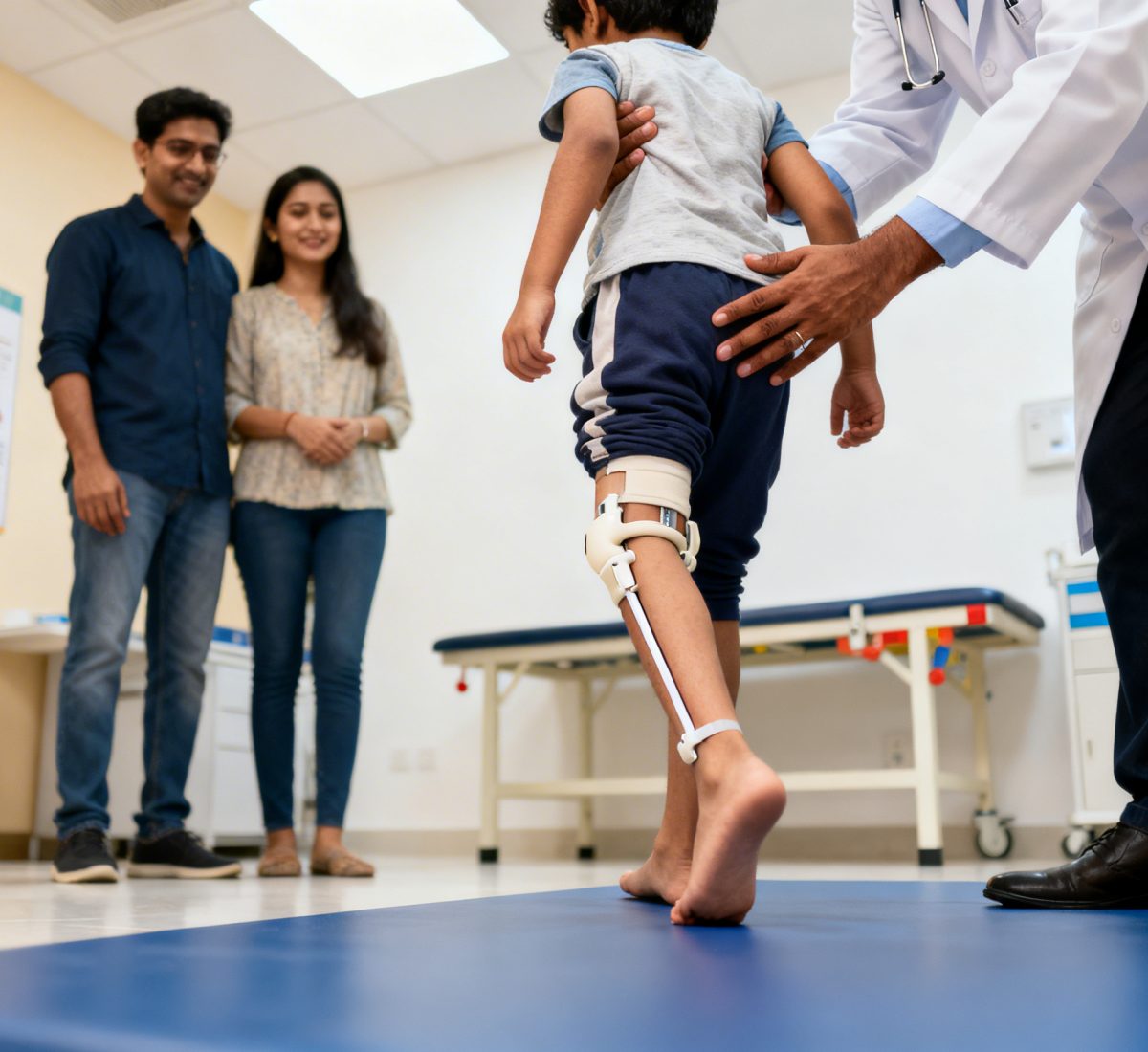
- Clinical examination of the legs and walking pattern
- X-rays, if necessary, to assess bone alignment and growth plates
These tests help doctors understand the severity and determine whether treatment is needed.
Treatment Options
Treatment depends on the child’s age, severity of the condition, and underlying cause.
Most children require no treatment, only regular monitoring as the legs straighten naturally with growth.
If the problem is related to vitamin deficiencies, doctors may recommend:
- Vitamin D supplementation
- Calcium-rich nutrition
In some cases, special braces or orthotic devices may help guide proper leg alignment.
Rarely, children with severe deformities may need minor surgical procedures to correct bone alignment.
Why Early Detection Matters
Early diagnosis ensures:
- Proper bone growth
- Correct leg alignment
- Better mobility and balance
- Improved confidence and physical activity for children
If you notice unusual changes in your child’s leg shape, consulting a pediatric orthopedic specialist can provide reassurance and timely care.
Concerned about your child’s leg shape?
If you notice bow legs, knock knees, or unusual walking patterns in your child, early evaluation can make a big difference in ensuring healthy growth and proper bone alignment. Book a consultation with our Pediatric Orthopedic Specialist today for expert guidance and reassurance.
Frequently Asked Questions
Yes, bow legs are common in babies and toddlers. Most infants are born with slightly bowed legs because of their position in the womb. In most cases, the legs straighten naturally by the age of 2–3 years.
Knock knees usually appear between 3 and 6 years of age as part of normal development. The legs typically become properly aligned by 7–8 years of age without treatment.
Parents should consult a pediatric orthopedic specialist if:
- The condition persists beyond the normal age
- It affects only one leg
- The deformity is getting worse
- The child has pain, difficulty walking, or frequent falls
Yes. Vitamin D deficiency (Rickets) can cause abnormal bone development, leading to bow legs or knock knees. Proper nutrition and supplementation can help prevent this condition.
Most children do not need treatment, as the condition corrects naturally with growth. In some cases, doctors may recommend nutritional correction, braces, or rarely surgery depending on the severity.
Mild cases usually do not affect walking. However, severe cases may cause difficulty walking, imbalance, or frequent falls, which require medical evaluation.
Doctors diagnose these conditions through physical examination, medical history, and sometimes X-rays to assess bone alignment and growth.
Worried about your child’s leg shape or walking pattern?
Our pediatric orthopedic team provides expert evaluation and care for bow legs, knock knees, and walking concerns in children. Visit or Call Shishuka Children’s Hospital in Bangalore for Expert Child Bone Care.
Book Appointment NowContact us