
Flexible Bronchoscopy: What Patients and Parents Should Know
Flexible bronchoscopy is a safe and commonly performed procedure that allows doctors to directly examine the breathing passages (airways) of the lungs. It plays an important role in diagnosing infections, identifying airway problems, evaluating persistent symptoms, and sometimes even treating blockages.
If your child or you have been advised to undergo a bronchoscopy, understanding the procedure can ease anxiety and help you prepare confidently.
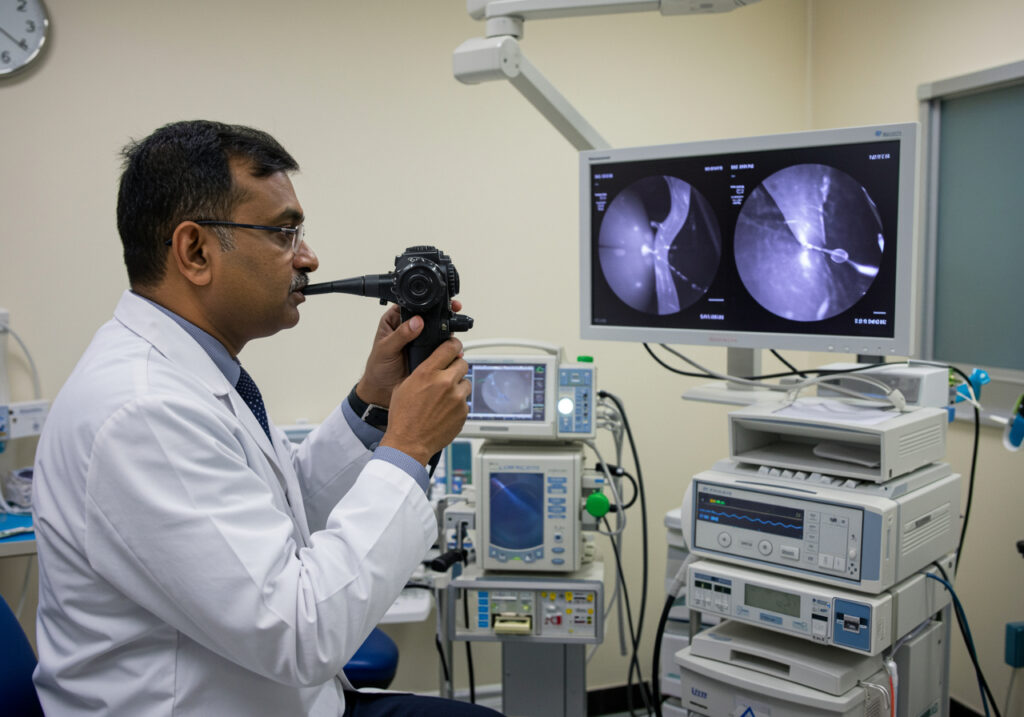
What Is Flexible Bronchoscopy?
Flexible bronchoscopy is a minimally invasive procedure in which a thin, flexible tube equipped with a camera and light source is gently passed through the nose or mouth into the airways. The instrument allows the doctor to:
- Visually examine the vocal cords, windpipe, and bronchial tubes
- Collect mucus or tissue samples
- Identify infections or inflammation
- Detect airway narrowing or structural problems
- Remove foreign bodies or thick mucus plugs
The images are displayed in real time on a monitor, allowing detailed evaluation.
Why Is Bronchoscopy Recommended?
There are several reasons why a doctor may advise bronchoscopy:
- Persistent or Recurrent Infections
If lung infections are frequent or not responding well to treatment, bronchoscopy helps obtain targeted samples to identify the exact organism causing the infection.
- Abnormal Findings on Chest X-ray or CT Scan
A “spot” or suspicious area seen on imaging may require direct visualization and sampling to determine whether it represents infection, inflammation, or another condition.
- Airway Blockage or Collapse (Atelectasis)
Sometimes a portion of the lung collapses due to blockage by mucus, a foreign object (such as a peanut in children), or external compression. Bronchoscopy allows removal of the obstruction in many cases.
- Coughing Up Blood
If a patient coughs up blood, bronchoscopy helps locate the source and guide further management.
- Noisy or Abnormal Breathing
Children with persistent noisy breathing, stridor, chronic cough, or suspected airway weakness may need bronchoscopy to assess structural issues.
How Should You Prepare?
Preparation instructions are simple but important:
- Do not eat or drink for approximately 6–8 hours before the procedure.
- Inform your doctor about all medications, especially blood thinners.
- Avoid smoking before the procedure.
- Remove dentures or removable dental appliances.
Your doctor will give specific instructions tailored to your medical condition.
What Happens During the Procedure?
- The patient is usually given medication to numb the throat and reduce coughing.
- Sedation is commonly administered to ensure comfort.
- Vital signs (heart rate, oxygen levels, blood pressure) are continuously monitored.
- The bronchoscope is gently advanced into the airways.
You may feel temporary throat discomfort or a sensation of not getting enough air, but oxygen levels are closely monitored, and the medical team ensures safety throughout.
The procedure typically lasts between 15 minutes to one hour, depending on the complexity.
Is Bronchoscopy Safe?
Flexible bronchoscopy is considered very safe when performed by experienced specialists.
However, like any medical procedure, it carries small risks.
Possible Minor Effects:
- Mild sore throat
- Temporary cough
- Hoarseness
- Low-grade fever for a day
Rare Complications:
- Temporary drop in oxygen levels
- Bleeding (especially if biopsy is performed)
- Air leak around the lung (pneumothorax)
- Infection
Serious complications are uncommon, and patients are closely monitored during and after the procedure.

What Happens After Bronchoscopy?
After the procedure:
- You will stay in a recovery area until sedation wears off.
- Do not eat or drink until throat numbness has completely resolved.
- Arrange for someone to drive you home if done as a day-care procedure.
Seek immediate medical attention if you experience:
- Severe chest pain
- Worsening shortness of breath
- Persistent high fever
- Coughing up significant amounts of blood
Your doctor may be able to share initial findings immediately. Laboratory results from samples usually take a few days.
When Should Parents Be Concerned?
If your child has:
- Recurrent pneumonia
- Chronic wet cough
- Suspected foreign body aspiration
- Persistent noisy breathing
- Unexplained lung changes on imaging
Bronchoscopy can provide valuable diagnostic clarity and guide treatment.
Final Thoughts
Flexible bronchoscopy is a powerful diagnostic and therapeutic tool in modern respiratory medicine. While it may sound intimidating, it is generally safe, carefully monitored, and highly informative.
Early evaluation often prevents prolonged illness and complications. If your pulmonologist recommends bronchoscopy, it is usually because the benefits significantly outweigh the risks.
If you have questions about the procedure, always discuss them openly with your treating doctor.